Granite is a hard rock with a saturated uniaxial ultimate compressive strength of more than 30 MPa. For this type of rock, it is usually processed using coarse, medium-fine crushing, and shaping processes. In this article, I will share the configuration of the granite crushing sand production line. This also applies to hard-to-break or higher-cost materials such as basalt, diabase, and andesite.
1. Granite properties
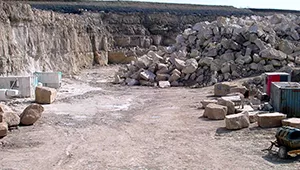
Granite is a high-quality building stone. It has a uniform structure, a hard texture and a beautiful color. The density is 2790 to 3070 kg/m³, the compressive strength is 1000 to 3000 kg/cm², the elastic modulus is 1.3 to 1.5x10⁶ kg/cm³, and the water absorption rate is 0.13. %, shore hardness > HS70, specific gravity 2.6 to 2.75. For this type of hard rock, the crushing process is usually used for subsequent uses. At present, granite is mainly concentrated in the east and north of China, and the total reserves account for about 75% of the country's total reserves. Shandong Province ranked first (32%), followed by Beijing and Fujian, which ranked second and third, respectively.
2. Sand crushing production line equipment
According to the different finished products, the crushing process can be divided into coarse crushing section, middle crushing section, fine crushing section and grinding stage. The general materials can be divided into three types: coarse crushed + medium crushed, coarse crushed + medium crushed + fine crushed or coarse crushed + medium crushed + fine crushed + formed. Forming will make the obtained product better formed.
The whole crushing process is as follows: The
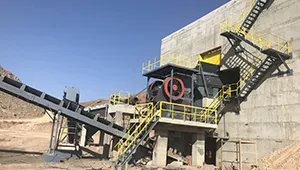
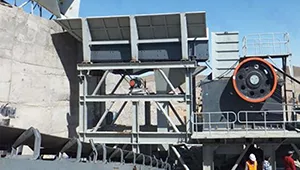
jaw crusher is used for the crushing process at the front end of the crushing line, which can crush large granular materials with a compressive strength of no more than 320 MPa into a size of 100 mm to 300 mm.
Impact crushers can usually process ore or rock below 500mm, and the compressive strength can reach up to 350MPa. The crushed material is cubic pellets. Impact crushers are typically used in the second crushing process of the crushing line, but they can also be used as the leading crushing process for materials with smaller feed volumes.
The
cone crusher adopts the principle of lamination crushing to form a protective layer of the material layer, which has the characteristics of reliable structure, high crushing efficiency, easy adjustment and economical use. The feed size is 13 to 369mm. Cone crushing is the same as reverse crushing. It is usually used in the second crushing process of the crushing line. For materials with small feed volumes, it can also be used as a front-end crushing process. However, the feed size of cone crushing is usually smaller than that of impact crushing. The sand making machine is suitable for crushing and forming soft, medium hard and extremely hard materials. It is usually used as the final step in the crushing sand production line.
In addition to the main crushing equipment, some auxiliary equipment, such as vibrating screens, feeders and conveyors, are also required to complete the configuration and work of this production line.
3. Granite crushing production line configuration
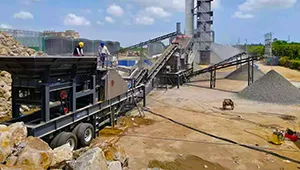
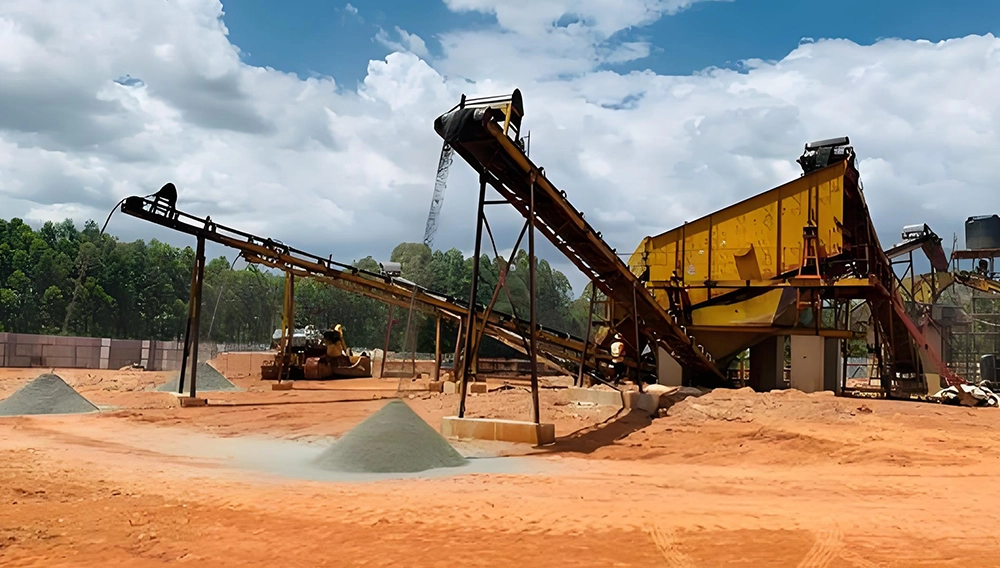
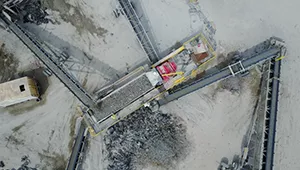
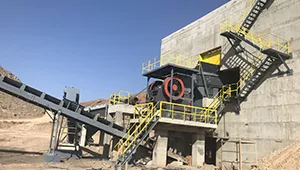
Due to the hard texture, the configuration of the granite production line generally needs to go through three stages, namely the coarse crushing of the jaw crusher, the medium and fine crushing of the cone crusher and the sand making of the sand making machine. The large granite material passes through the silo to the vibrating feeder for uniform feeding, and then enters the jaw crusher for the first crushing. The coarsely crushed material is screened through the vibrating screen as needed, and then conveyed by the belt conveyor to the cone crusher for a second fine crushing. After medium and fine crushing, it is screened with a circular vibrating screen, and the larger particles are returned to the cone crusher and crushed again. The materials that meet the requirements go into the sand making machine for further crushing and forming. If you need cleaning materials, you can send them to a sand washer for cleaning. The materials that meet the requirements are then sorted and packaged according to different size ranges.